6 Ways to Soothe Your Nervous System
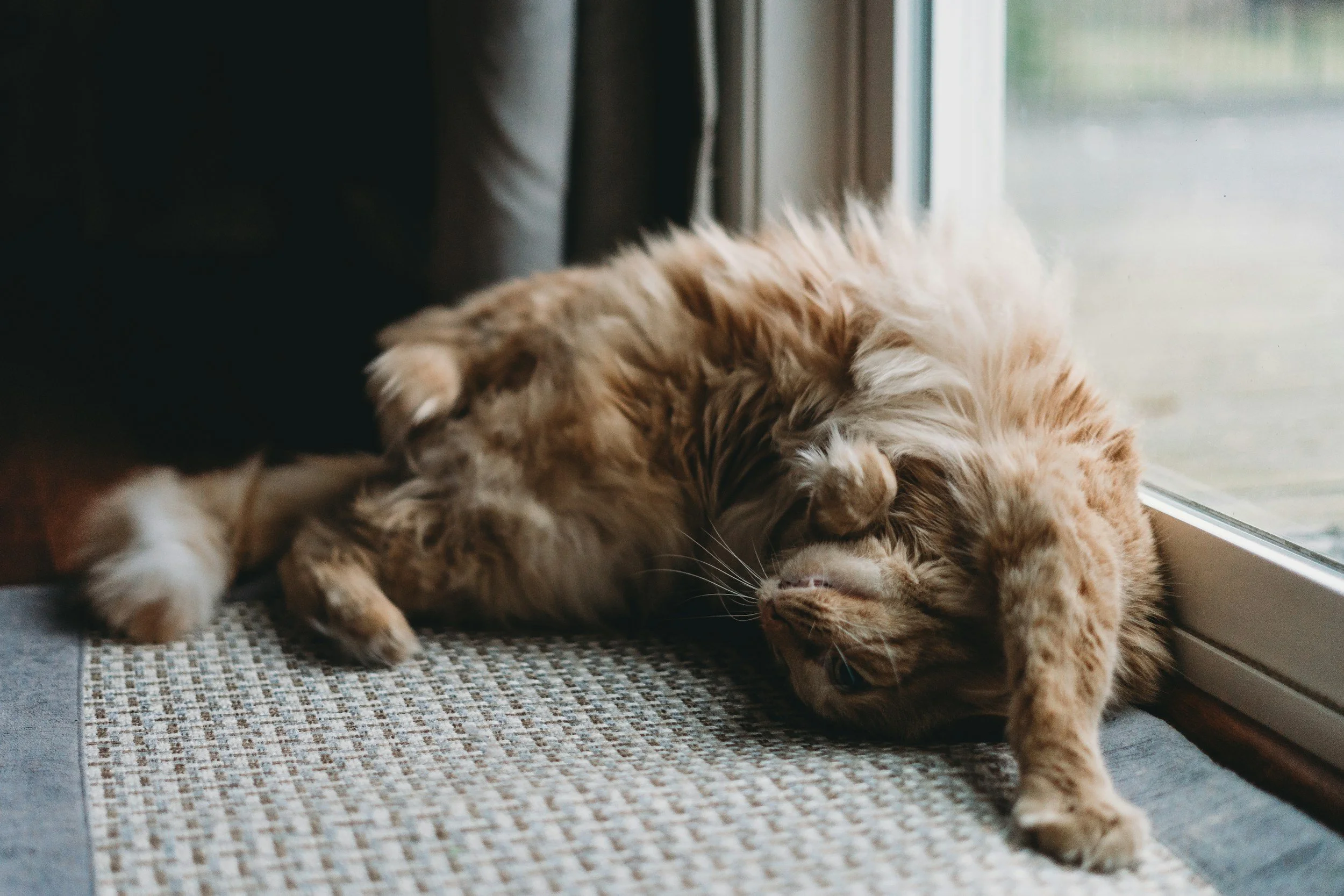
Life is demanding and confusing and complex, and in order to show up as the best versions of ourselves, and also tap into the creative capacity we have to bring out work forward, tending to the nervous system is really an essential and ever-evolving practice. As we inch closer to winter, you may feel the familiar pull towards hibernation, rest, and the pause offered in in the liminal space of waiting for a new year to begin. And that means it’s the perfect time to continue our conversation about the nervous system with practical-yet-gentle ideas for taking care through the holiday season and beyond.
For all the respite this quiet season can bring, holidays aren’t without their triggering moments. When we get in a state of dysregulation—where we might feel stress or anxiety or tension in our bodies—our brain loses access to the rational prefrontal cortex. It’s why making seemingly simple decisions (what should I make for dinner?) can feel destabilizing, or we might feel overwhelmed with daily tasks.
Since it’s normal to feel this way from time to time, having a toolkit of techniques that soothe the nervous system can help your brain reset and know that it’s safe. And depending on what you choose, there are things we can do on a daily, more regular basis almost like nervous system maintenance, and then there are those practices that we can draw upon when we’re in a more acute state of stress and need support in the moment.
6 Ways to Soothe the Nervous System
Before we explore the practices, it’s important to remember that everyone’s nervous system is different. That means not everything I’m about to share will feel good to you. As always, take what inspires you and leave the rest.
Aromatherapy
What I like about essential oils is that they have the ability to work quickly to shift how you’re feeling, and I find they’re also pretty easy to incorporate into the day. In terms of the science behind it, one study looked at 54 elementary school teachers to see how aromatherapy impacted stress levels. They used a bergamot essential oil spray for 10 minutes, and found that blood pressure levels and heart rate levels lowered, while heart rate variability increased just in that short amount of time. Diffusers are useful when you’re sitting at your desk and working, and rollerballs are easy to both keep around the house or take on-the-go.
Breath Work
We breathe all the time. Our bodies know how to breathe to stay alive. And yet, we don’t always breathe well. But the more I’ve learned about the benefits of breathwork, the more I appreciate how breath is something we can access anytime, anywhere. It’s free and always available to us, and can make such a difference in the way we feel. One person I’ve been learning from this past year is Keisha Yokers, who runs the breathwork and somatics program at Lindywell, and one of the things she says is that “Deep and controlled breathing techniques can trigger the body's relaxation response, reducing stress and anxiety levels. It helps calm the nervous system and lowers the production of stress hormones like cortisol.”
If you’re new to breathwork, experimentation is really important because there are a lot of approaches. There’s box breathing. There’s coherent breath. There’s more vigorous breath work to increase your energy and wake up your nervous system, and you can also go slow to invite that state of calm, depending on what you need in the moment.
I also think it’s more effective to do something small and consistently than trying to commit to a 30 minute breathwork session every day, or even every week. But if you take two to five minutes out of your day to breathe, or remember to take mindful breaths when you’re driving or waiting for an appointment, just incorporating it into your day can go a long way to supporting your nervous system.
Another piece of the conversation that’s an offshoot of breathwork is supporting the vagus nerve. The vagus nerve is our largest cranial nerve and it travels throughout the body, including several organ systems—from our tongue to our GI system, it impacts a lot about our day to day.
The New York Times describes it this way, saying: “The vagus nerve picks up information about how the organs are functioning and also sends information from the brain stem back to the body, helping to control digestion, heart rate, voice, mood and the immune system. For those reasons, the vagus nerve is sometimes referred to as an “information superhighway.”
Something else important to know about the vagus nerve is it’s the main nerve of the parasympathetic nervous system, which is what helps turn on our body’s rest and digest system. For the vagus nerve specifically, you can do things like gargling for 20-30 seconds, humming, singing in the car, finishing your shower with some cold water. You can take a deep breath and then with your mouth closed, add some noise at the end.
Breath is always available. It doesn’t take a lot of advance planning like drawing a bubble bath or booking a massage appointment. You can just drop into your belly and breathe, especially those slow exhales really help encourage a calmer state.
Lymph Massage
Lymph massage is something I discovered in 2022 and now consider part of my self-care toolkit. (THE BOOK OF LYMPH by Lisa Levitt Gainsley is a wonderful resource to not only learn about your lymphatic system but to easily do lymph massage sequences at home.
In the book she says “the lymphatic system is connected to every other system in the body—including the nervous system, the digestive system, and the neurological system—with branches that run through its wide geography like an intricate web of rivers.” And she likens lymphatic massage to a habit as essential as flossing your teeth every day. In the book she has a sequence to support stress and anxiety, which focuses quite a bit on the vagus nerve, and in the introduction to that sequence she talks about how our breathing changes when we’re under stress, we tend to hold our breath or take shallow breaths, and this can create tension in bodies. And breathing is one of the things that helps pump your lymph, so it’s all connected.
If all of this sounds daunting at all, I’ll say for myself that I found it pretty easy to integrate into my evening routine a few times a week. Depending on the sequence you do, it can take anywhere between 3-10 minutes, and beyond the book itself, you don’t need any equipment or tools and it’s something that can have a really positive impact on every system of your body.
Reading
Including reading on this list may seem obvious to an audience of writers but I wanted to mention the correlation that I found between reading and relaxation because while I knew intuitively that reading is something that relaxes me, my Oura ring tracks reading sessions as being on a rested or restored state. That’s anecdotal evidence from me personally, but a 2009 study found that found reading for as little as six minutes reduced stress pretty significantly. The researchers also found that reading helped reduce stress more quickly than listening to music, drinking tea, or going for a walk. Something that sets reading apart is the concentration needed to read a book, which is what helps distract your brain away from more anxious thoughts, and then reduces your heart rate and muscle tension. Reading, as we know, also ignites the imagination and stimulates creativity.
More specifically, poetry might be the best choice if you’re actively trying to reduce anxiety in the moment. In YOUR BRAIN ON ART, the authors share how reading poetry ignites regions of the brain associated with being in a restful state. “Our brains process poetry differently from prose. When we read through the verses, it can create a state that neuroscientists refer to as “pre-chill,” where we ride a gentle crescendo of calm emotion. Which is to say, reading a few poems when restless or unable to sleep can help relax you and give you more perspective and insight.” To study this, researchers used fMRI machines and found that when participants were reading poetry, the areas of our the brain’s basic reward system lit up. Arthur M Jacobs, experimental psychologist and professor in Germany, says “the new research was suggesting that poetry, more than any other literary form, demonstrates ‘the complexities with which our brain constructs the world in and around us, because it unifies thought and language, music and imagery in a clear, manageable way, most often with play, pleasure, and emotion.’”
Doing something tactile
Next up is a category I’m calling “doing something tactile,” and it encompasses a variety of different ideas. At a basic level, busying our hands grounds us in the moment. It can help channel nervous energy out of the body, encourage our minds to settle, and also be an enjoyable way to spend quality time solo. A few ideas:
Coloring
Cooking
Knitting
De-pilling sweaters
Touching trees
On the topic of trees, a 2019 study in Frontiers of Psychology confirmed that spending 20 minutes in nature—or in a place where you feel connected to the Earth—significantly lowers the levels of the stress hormone cortisol, and that even just shifting your visual perspective in nature changes your physiology. So don’t forget to look out the window. Sometimes when I’m walking on a trail, I stop and touch the trees as I’m walking by. I really try to stay present and notice how the bark is different, whether my hand can fit all the way around. Just yesterday I did this again and was struck by the sturdiness of the trees I was walking among. The world is a lot right now. There’s so much that can make us feel unsteady, both in our personal lives and also collectively, and for a few moments, we can just stand next to something that is grounded and rooted and strong, and tap into some of that energy for ourselves.
One final idea here is to work on a decluttering project, and this can actually be physical or digital, depending. Nervous system coach Alyssa Chang has said that “the nervous system is unable to compartmentalize stress,” which I find really interesting, so she says it’s “important that we curate a safe relationship with what we are consuming” and she’s talking specifically about social media, TV shows, and movies—digital entertainment, essentially.
One thing you can do is to go through your social media feed and unfollow or hide profiles that don’t feel supportive to the season you’re in right now. And this idea can be applied to other spaces in your home, like your closet, your pantry, things like that. There’s always a lightness that comes from releasing things we don’t need, and that can also be soothing when it’s done with intention.
Rewatching
Like books, it feels like there’s always something new to watch, but from a nervous system perspective, re-watching a show that you’ve already seen can actually be a supportive tool. It lets you zone out and integrate because you’re not on the edge of your seat wondering what’s happening next. You already know the outcome, and that can really help instill a sense of calm and safety in your body. This fall I’ve been rewatching Suits, I turn on Friends sometimes. And I remember a couple of years ago now, deep in the early days of the pandemic, I actually started watching Saved by the Bell: The College Years.
When I started digging into why this can feel so good, I came across an article that spoke with psychologist Jaye Derrick, who is the director of the Social Processes Lab at the University of Houston, who was explaining, and this makes a lot of sense that although we often think of watching TV as a sort of passive activity, it can actually take energy. Especially if it’s something that you don’t particularly like, or if you’re stressed or tired, and you're trying to watch something new, it can have the opposite effect that you’re intending. And she says that when you’re watching a new episode of a favorite show, or rewatching something you already know you like, you’re actually doing a form of emotional regulation. In short, rewatching, feels safe.
I hope this post offered a few ideas for ways to support yourself this season and beyond, or maybe it reinforced something you’re already doing. Either way, keep tending to your needs, creatively and otherwise.