How to Plan a Restorative DIY Writing Retreat
Back from a two-day writing retreat, I wanted to share some takeaways so you can also get the quiet, restful, writing time you need. Prior to this getaway, I’d been telling my partner for probably two years that I wanted to do this, and he was always really supportive, yet for whatever reason, I just wasn’t able to get something on the calendar. There were work schedules to consider, school schedules, a global pandemic. It didn’t come together for ages, but then I got to talking with a local writer friend and we both just agreed to do it. We looked at our calendars, sent invites to everyone involved, and started planning. Overall, it was glorious and life-giving, but predictively, there was also some resistance, decision fatigue, and general sense of needing to “make the most of it” that popped up too.
Here’s the order we’ll be covering everything:
What my specific experience looked like
Planning and logistics
Questions to ask before planning a writing retreat
My 2-Day Writing Retreat on the Coast
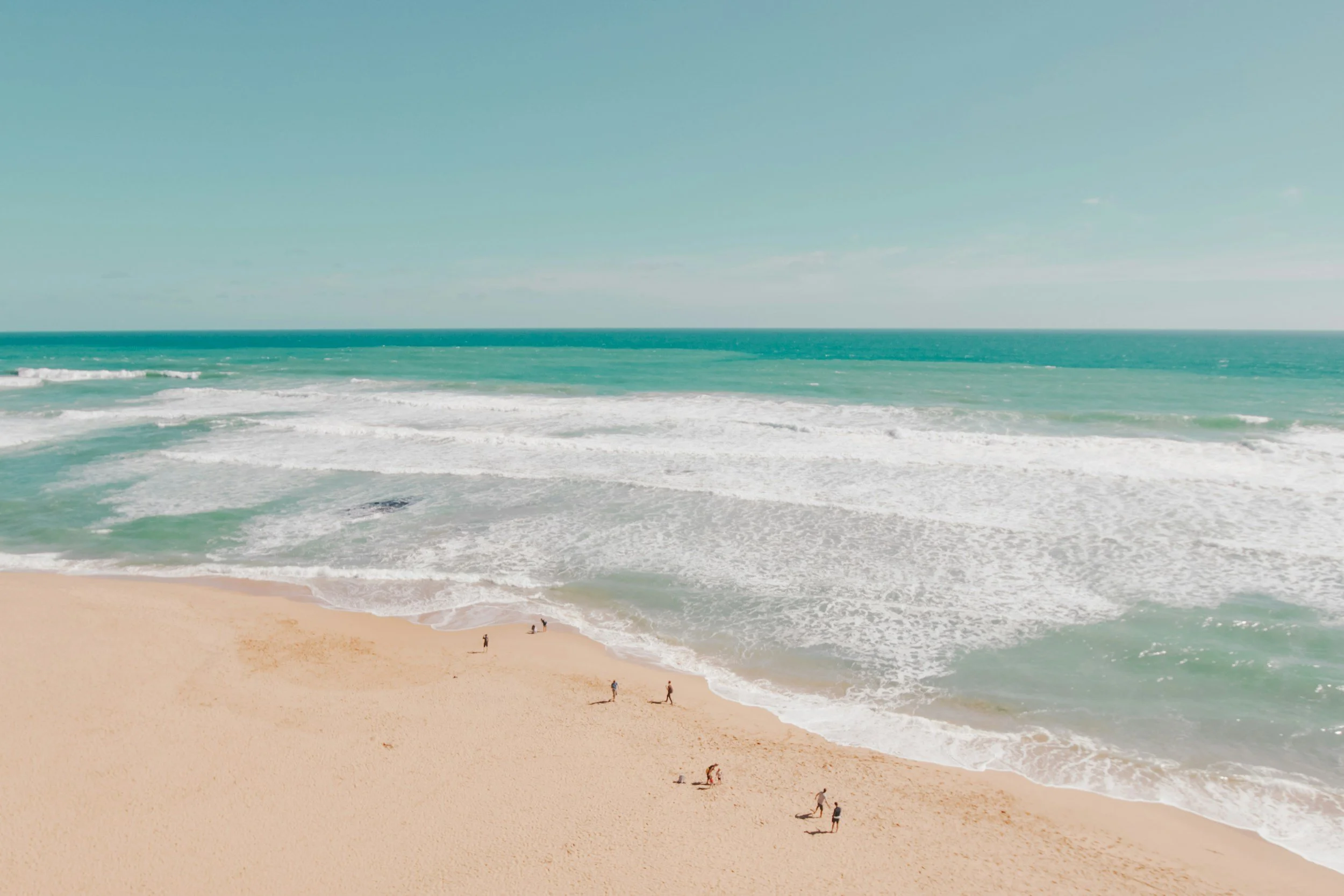
My writing retreat was two nights, approximately three hours from where I live, and I went with another writer friend. We stayed at my parents condo on the North Carolina coast, so expenses were minimal aside from a tank of gas and meals. In the five months between when we scheduled it and the retreat arrived, we did have to make one tweak to our dates because of something that came up, but it was an easy solve and we forged ahead, and I those three to four weeks of anticipation felt really nice. You know how they say anticipating a vacation gives you such a boost? There’s a quote from psychologist Carla Marie Murphy that I found who says: “The mere idea of getting away can bring a sense of immediate happiness. In essence, the simple act of imagining a future positive event can induce a sense of joy and well-being.” I love this for writing retreats. Especially if it’s not something you do often, there’s such delight in knowing what’s to come and feeling like yes, I’m doing something for myself and my writing.
Here are some of the logistical details:
We went mid-week, leaving Tuesday morning and returning Thursday afternoon.
The retreat location was driving distance from where we lived.
We planned to do our own thing during the day, and meet up for dinners.
My plan, writing-wise, was to bring a couple of things to work on. For the travel day, I didn’t want to do anything that required a lot of deep focus, so I printed out some poems to edit, which was a great project for that in-between hour and to just get me into the mindset of being here to work. During the full workday, I alternated between annotating a book I’d brought as a comp title to something I’m working on, and then actually writing. And of cours,e there was also down time—I went for walks, meditated, read on the beach for a bit, and there was a general sense of slowness to the day which I really liked, and this opportunity to check in with myself and ask what I felt like doing in that moment.
Something I was expecting and definitely showed up was a little bit of resistance, or strangeness. When I woke up on Wednesday morning, alone in bed, listening to ocean waves, it took me a few minutes to wrap my head around the fact that there was nothing to actually do. No lunch to pack. No laundry to fold. No distractions like looking through a box of old photographs I keep meaning to put into albums, or checking my work Slack channel. The only needs to tend to were mine, and they were basic: eat, sleep, rest. This felt a bit… odd but also wonderful. I made enough progress and accessed that flow state to sustain me after getting home and make me feel like there’s some more life in this current story I’m working on.
The next morning was another travel day, but we still had a chunk of time in the morning. I did more walking on the beach, and more reading of the book I brought. I might have gone back to the pages I’d written the day before and added to them a little bit but—and this happens whether I’m at home or away—I had a really great writing day and usually it’s difficult to replicate it energetically without having a rest in between. Because I knew I’d also be driving, I just didn’t expect to do much in terms of word count, which was totally fine.
Going with another person, it ended up being good blend of solo time and also time to connect with someone and talk shop. When we had natural breaks in the day, or over breakfast and in the car, we’d talk about writing stuff. For example, both of us had brought books to annotate and we had a whole conversation about how we go about this process, which I thought was really great because there are lots of different ways to study books so it was fun to hear how she approached it and again, just be around someone who normally we don’t have tons of time to devote to these kinds of topics.
After arriving home, I didn’t work on much writing for a couple of weeks. I want to be honest about that, because even though I felt so amazing on this retreat and excited about my project and all that good energy was just flowing, I returned to my regular life with my routines and responsibilities, and so I had to do what we often talk about, which is to go slowly and pick one or two things where I could focus my attention, and get myself back in the swing of things.
How to Plan a DIY Writing Retreat
If you’re craving some time away, here are a few places to start when it comes to planning your writing retreat.
Scheduling the Details
The first thing that comes up is your schedule, with the big questions being: When can you go away, and for how long? Look at your calendar. Talk to your partner. Look at your work schedule. Keep any school events or closures in mind, and once you’ve done all that, PUT IT ON THE CALENDAR, and send the invite to whoever you need to.
It’s worth noting that sometimes we talk ourselves out of going away because we think one night won’t be enough. Yes, that weeklong retreat in Tuscany sounds dreamy, and hopefully you’ll be able to attend one day, but if you do a few one-night stays locally, you’ll still make progress and feel more connected to your work. We’re not always in touch with that electric feeling on a day-to-day basis, so if we can create conditions to allow it to emerge, that will really help sustain us on the long road of whatever project we’re working on.
Choosing the Location for Your Writing Retreat
When planning a retreat, I think it’s fun to have some dream ideas, and then some super realistic ones too. And where you go will be dependent on a lot of factors. For example—if you’ve never left your family before, or never longer than a day or two, and the idea of doing that fills you with a fair amount of anxiety, you might want to experiment staying closer to home for a night or two and building up to something longer. If you’re pretty seasoned in doing smaller getaways, you might be ready for that trip to France or Sedona or Mexico, and want to join an organized retreat hosted by a writer you admire or a place you’ve always wanted to visit, and that feels more within reach.
A lot of us might be somewhere in the middle, and it’ll come down to your season of life, your work schedule, your partner’s work schedule, your kid’s school or activity calendar.
As a way into this planning process, you might want to do something like pull up Google maps, and look at what’s around where you live. Consider hyper-local options (within one hour) and expand into driving distance (three hours or less if you’ve only going for a couple of nights). Spend time doing a little bit of research. Look for cute boutique hotels, charming inns or B&Bs. You might want to look up Airbnb too. And if you’re someone with a hotel credit card and have points for a certain brand like Hilton or Starwood, that can be an option too.
Something else to keep in mind here is not just the location you might be traveling to, but the location of the space itself where you’ll be staying. Do you want to basically check in and stay put? Then you might want something in a walkable district in a downtown area that has all the amenities you’ll need. Are you fine with bringing your own food and cooking your own meals most of the time? You might be able to stay in an Airbnb that’s a bit more secluded, or within a short drive of restaurants and grocery stores.
These choices will impact your time. For example say you’re having this great writing session in the afternoon and then you realize you’re starting to get hungry for dinner. If you haven’t planned for that, it’ll feel more like a disruption versus a natural time to break, so what I’m saying is, you basically want to match your location with your preferences in terms of how you want to manage your meals and your time.
Are you someone who prefers to travel with their own pillow and other comforts from home? Then something driving distance vs. hopping on a plane might be the way to go.
Going Solo or With a Group
The first thing I’ll say about this debate between whether it’s better to go by yourself or go with a friend or small group is this: if you have any opportunity at all to go away and focus on yourself and your writing, DO IT. Always go.
Now, if you have some choice and some time to plan and want to be extra thoughtful about how you approach this, I’ll share some thoughts to help you do that, but the #1 thing is to go away.
I think there are some benefits to all scenarios so let’s start with solo.
If you go by yourself, you’re alone. Alone, alone. This option gives you almost no distractions except the ones you might create for yourself. If you’re desperate to hear yourself think, you don’t want to share a space with anyone else, and also maybe if you’re only going for a 1-night stay, solo is a great choice. All of your time will be uninterrupted, as opposed to meal times or other natural gathering times when people might get together.
You might do what I did, which was go with one friend. (This maybe goes without saying, but if you’re going on a retreat with another writer, or multiple writers, it would really help if you’re friends with them, or get along—basically they should be people you want to spend some time with.) We all know the writing life can be a solitary one, especially when working on long book projects. Having a couple of days to share ideas, brainstorm casually, compare notes on our process, and talk about writerly things was life-giving, and so important.
In a recent newsletter, Edan Lepucki wrote about the logistics of her own writing retreat:
“I’m reporting to you from the final morning of my writing retreat in the Santa Ynez Valley, a self-designed residency cooked up with five of my favorite novelists. We did the same thing last year and it’s become an annual tradition. These friends are not only talented, funny, and kind, they’re also committed to working and focus. It’s nice to win a spot at an illustrious residency (especially one that pays you to come), but if you can carve out the time and the budget to do it on your own, you can be just as productive and inspired. We rent a house and work all day and each night a duo makes dinner for the group; on the last night we go out to eat. There is no application, no recommendation letters required, and no nervous meeting of strangers. Just us and the days we want to make. It’s bliss.”
A couple of things I noticed here. First, she described her friends as “committed to working and focus,” so that tells me everyone’s on the same page in terms of prioritizing their work. Then she talks about how they deal with dinners. Ahead of time, they set up pairs who take care of making dinner for the group, and then on the last night they go out to eat as a group. I love this because it’s organized and planned out.
Fueling Your Body
We touched on meals briefly earlier, but since we’re here let’s dig into it a little bit more. Personally, once I’ve arrived at my destination, I prefer to spend more time relaxing and writing than researching take-out menus. That’s why I’ll tend to frontload the work required to make sure I’m eating well. I brought food for breakfast and lunch, and we made reservations for dinners, or picked something up nearby. I also made sure to pack a few extras, like dark chocolate bars and my favorite sparkling water, and I made a batch of chia seed pudding ahead of time to snack on. We’ll all approach food a little bit differently, but it’s really important to think through so you’re not spending your retreat time trying to figure out what you’re going to eat.
Something we might not always consider but is really helpful is to plan ahead for dinner the day you get home. It can be jarring to go from blissful creative mode back to parenting mode. Tired from traveling, the last thing you’ll want to do is make a meal from scratch. Order take-out or have something already stashed in the freezer ready to go.
Getting the Most Out of 1 Night Away
Here’s my trick for getting the most out of one night away: Block off the full day ahead of your one night stay, and most of the following day, if you can. To maximize writing time, leave in the morning and drive to a coffee shop, bookstore, or library in the area where you’ll be staying—basically somewhere you can set up shop for a couple of hours. Do some writing or reading. Then go have lunch somewhere. Then repeat and write more before checking in, which is usually around 3 or 4 pm. The following day, go for a walk, write in the morning, and don’t check out until the last possible moment to minimize feeling rushed. And instead of going straight home, again, go have lunch, then stop somewhere where you can work for a few more hours before heading home in the late afternoon.
A few final notes in a miscellaneous category to touch on:
Manage expectations. I feel like a broken record when it comes to talking about being realistic about expectations, but I found it really helpful to go in with more of a loose plan than anything solid. In part, this was because I wasn’t currently in the middle of anything substantial (e.g. like a revision where I focus on a particular element of the book) and the retreat was only for two nights, so I didn’t want to bite off more than I could chew, so to speak. Wherever you are, just think about matching your work with your time away and not trying to overdo it. In part, because yes you’re going away to write and that’s really important, but you’re also going away to rest, take a breather, and be able to listen to yourself and your work in ways that are sometimes harder to access at home.
Remember that rest is medicine. When you don’t get a lot of time alone, it can feel like you must maximize your time no matter what, but it’s essential to listen to your body. After my full day of generative work, I sensed I probably wouldn’t be able to replicate this energy the following day. So I read more, took a walk on the beach, and dropped the expectations (see above).
Flow with the momentum. Just as anticipation builds before the trip, momentum will exist afterwards too, which is a great benefit. My friend texted me a few days after we got back and said she had more ideas for her book come through. There’s definitely a tailwind that might follow you for a few days or a week, even if you’re not sitting down writing a lot. Be on the lookout for those ideas and write them down when they come.
The retreat starts in transit. If you’re driving a couple hours away or taking a flight, that counts as part of your retreat time. Listening to podcasts is a great activity. If you’re driving with a friend you can cue up some episodes you both might enjoy, or spend time talking through each other’s project. The getting there part doesn’t have to feel like it’s wasted time or just something you have to get through until you can start writing.
Any words will do. It’s easy to get in our heads and not start writing, but any words will do. I reminded myself of this a few times. These aren’t the final words. Once I wrote a sentence, and then another, my imagination started taking over. I kept going and ended up with 1,500 words. Will a lot of them change in the future? Probably! But what that session gave me was a feeling of aliveness—the story itself started to pulse more. Yes, resistance might make an appearance, but any words will do. Just start writing and see where it takes you.
Capturing Writing Retreat Magic in Real Life
On my trip home, I kept turning over the question of how to capture this magic in real life. Can I somehow access this state even if I’m not spending the night away from my family? Leaving the house helps enormously with this. Distractions will always exist in our domestic space. Your partner might come in and talk to you. Your dog wants to go outside. The UPS driver rings the doorbell and you jump out of your chair. You pass a box that’s been sitting in the hall and ponder finding a home for whatever’s inside. You stand in front of paint samples on the wall in your dining room.
Physically leaving is a signal that triggers your brain to worry less about the laundry/kids toys/scrapbook project/dishes and focus more on the task at hand. Go to a coffee shop and write for a few hours, or go to a public library or bookstore. Whatever you’d do on retreat writing-wise, find another space to do that. With a system like this, you won’t do it all in a day, but there’s something about that SEPARATION and that SPACE you create by physically changing locations that helps a lot.
And then when you get home, you can move the wet clothes to the dryer, prep a snack for your kids, and take the dog out. But you will return HAVING WRITTEN, which might be one of the best feelings in the world.
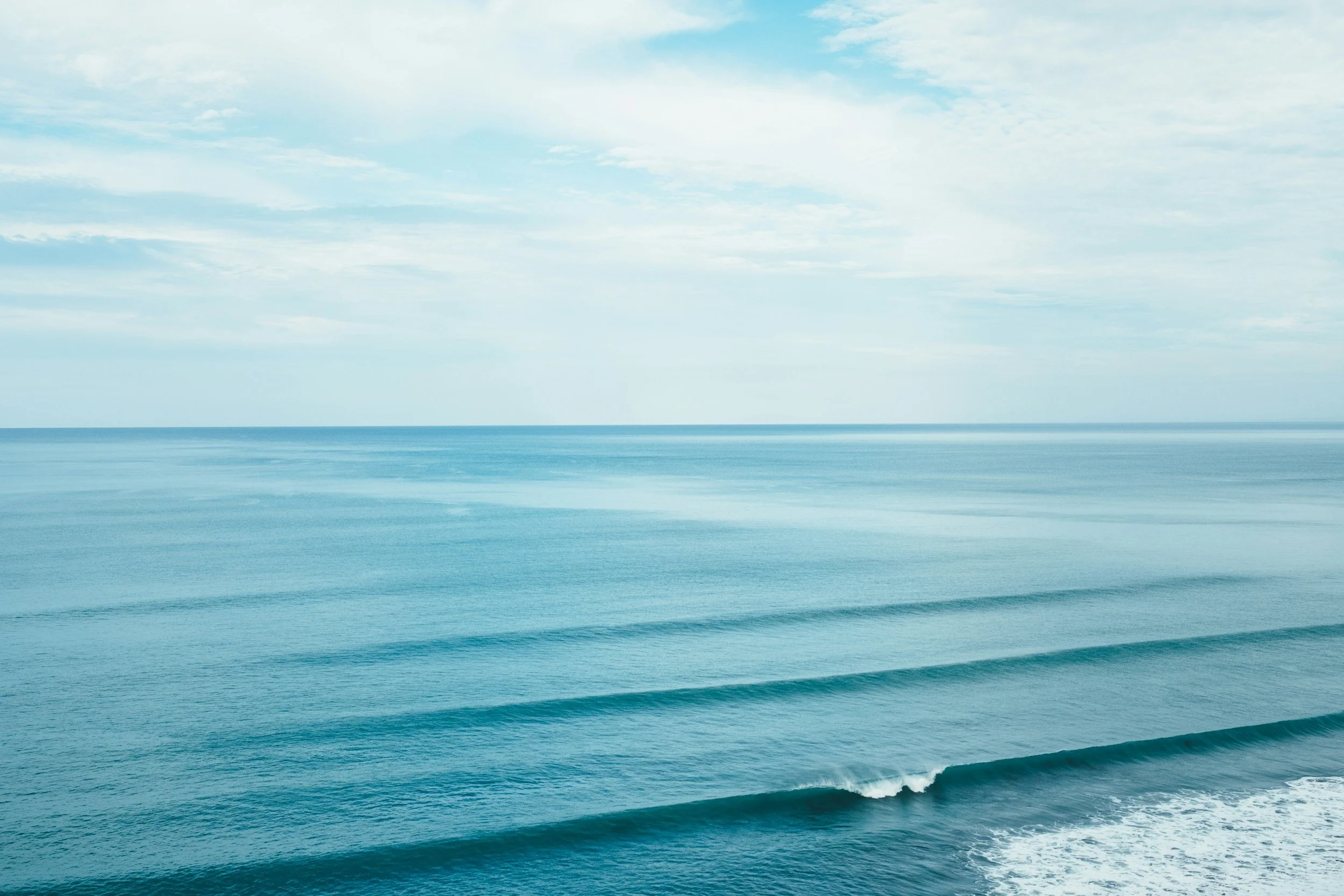
The morning I was set to drive home, I took a long walk on the beach. And as I crossed the road and headed down the wooden path, I immediately noticed that the ocean seemed different. The previous two days, the waves had been larger and a bit more ferocious, and today, it was calm. Small waves lapped the shore slowly, and it was such a stark contrast just from the day before and I stood there for a minute thinking, of course.
The ocean is not the same every day. We know waves are impacted by tides and weather systems and that’s not unlike our bodies—we have cyclical patterns and energy shifts and hormonal ebbs and flows. I stood in deep recognition of nature’s cyclical wisdom and completely softened into what I’d accomplished during my time away. Taking this walk and seeing this conviction lived out in nature itself, I felt even more grounded to my own process and the trust I’ve cultivated in myself that everything will unfold in its right time.