The Anchoring Power of Cycles & Seasons
When I relaunched the podcast a few months ago and updated my definition of slow writing, here’s where I landed:
Slow writing is rooted in the belief that we create at our own pace, mimicking the wise cycles of nature and our bodies, to bring our stories forward in a sustainable way.
That middle phrase “the wise cycles of nature and our bodies” is what we’re going to explore today. (If you prefer to listen, press play on the podcast episode below!)
What Are Cycles and Seasons?
Let’s start as we often do, with a set of definitions. Although I tend to use the words cycle and season interchangeably, there are some subtle differences I wanted to point out. Cycles and seasons are both recurring patterns or fluctuations that occur over time, but one of the main differences between them is duration. Cycles are typically the longer of the two, and seasons are shorter.
Taking an example from the plant world, let’s think about a bright orange poppy. Buds appear in late spring, bloom in June, and it returns to a seed pod before autumn. These are all micro-seasons of the plant’s life within its larger life-cycle that lasts the course of a year.
Of course, we also have the menstrual cycle. There’s plenty of of variation here but for this example we’ll take 28 days, and within that full cycle are four distinct seasons that are shorter, like the follicular and luteal phases, regardless of how long your entire cycle lasts those four seasons always exist within it. It’s the same with the moon. The moon orbits the earth roughly every 29.5 days, and that full cycle also has shorter seasons within it, the full moon, new moon, first quarter, and third quarter.
Either way, cycles and seasons are both anchor points in our lives, and there are so many ways to use them and their grounding wisdom.
The Problem With January
Before we talk about all of the different cycles we can draw from, we actually need to discuss something else, and that’s the history of the Gregorian calendar and the problem with “New Year, New You” energy in January.
The Gregorian calendar was created by Pope Gregory XIII in 1582 and it was essentially trying to fix a math problem. The calendar used previously was called the Julian Calendar—the Julian calendar was introduced by Julius Caesar around 45 BCE and this was more aligned with religious holidays, but was later replaced with the Gregorian calendar because it was linear and structured and handled leap years differently—essentially, it was great for trade, government, and economic purposes, but one problem is that it really doesn’t align with how nature works.
In the calendar we use today, months have uneven lengths, weeks restart without recognizing anything that might be going on in the lunar cycle, and it discounts our physical bodies and nature. Nature doesn’t start fresh on January 1st. It’s integrating and regenerating what was completed in the fall. So much is happening under the surface but it’s not splashy or always noticeable which is why the very glittery holiday of New Year’s landing when it does at the end of December, literally in nature’s darkest time, can feel so disorienting.
Before all these calendar systems were invented, time was more cyclical and connected to growing cycles. We know winter is about rest and darkness, and you must have that renewal before the emergence of spring. Nature shows that every single year. So if you’re someone who doesn’t always feel like you’re ready to go in January, that’s because you are nature and your body is longing for rhythms that are more aligned to what’s happening outside your window than what culture is telling you to focus on.
Over the years, this more rigid view of time eventually influenced the Industrial Revolution, a period we can thank for phrases like “time is money,” as well as the 40-hour workweek. EP Tompson was a British historian who was critical of what he called “clock time” and wrote an essay in the 1960s called “Time, Work-Discipline, and Industrial Capitalism” where he argued that what we think of as “clock time” isn’t actually natural.
In the essay he explained how time was actually a lot more flexible and that most people didn’t organize their lives with such precision. He said “Time was task-oriented, not clock-oriented,” meaning you worked until the job was done. You followed the daylight, the seasons, the tides, the churchbells, or communal rhythms.
This really lands for me when I think about some of my early years working full-time. I would just sit at my desk after finishing my work for the day, but I couldn’t leave because that wasn’t the social norm. It made no sense to me, and I also had no language to really describe it at the time, but my body was having a natural reaction to this idea of “moral pressure” that time now created. Time was regulated and enforced, regardless of whether or not my own personal rhythm meant that I wanted to be doing something else in the middle of the day.
Unfortunately, I don’t think we’ll be getting rid of the Gregorian calendar anytime soon, but we can RECLAIM some of our inherent rhythms and imbue our days with more cyclical energy when we can.
6 Types of Cycles Available to Us
I have a handful of different seasons and cycles to share and we’ll start with the bigger, more overarching ones which are cycles of nature and cycles of our bodies. Then we’ll talk about some of the more subtle cycles you might want to consider, and at the end I’ll walk you through a process of figuring out which cycle to pay attention to when and how to sort through them all based on your needs.
Cycles of Nature
The 4 Seasons
First we have the four seasons—I think these are pretty well known so we don’t need to spend too much time here, but of course we have spring, summer, autumn, and winter. Over the course of a year, the earth experiences these four phases that expand and contract, and each season is essential to the whole. If you’ve listened to Episode 34 on the necessity of winter, with Rebecca Magee she talks about how one of the ways we can connect is to have a daily practice of noticing. Look out the window and see what the earth is doing right where you are. This helps us connect with nature’s rhythms in tangible ways and then we can also turn to that inquiry internally, which we’ll talk about in a minute when we get to menstrual cycles.
The Lunar Calendar
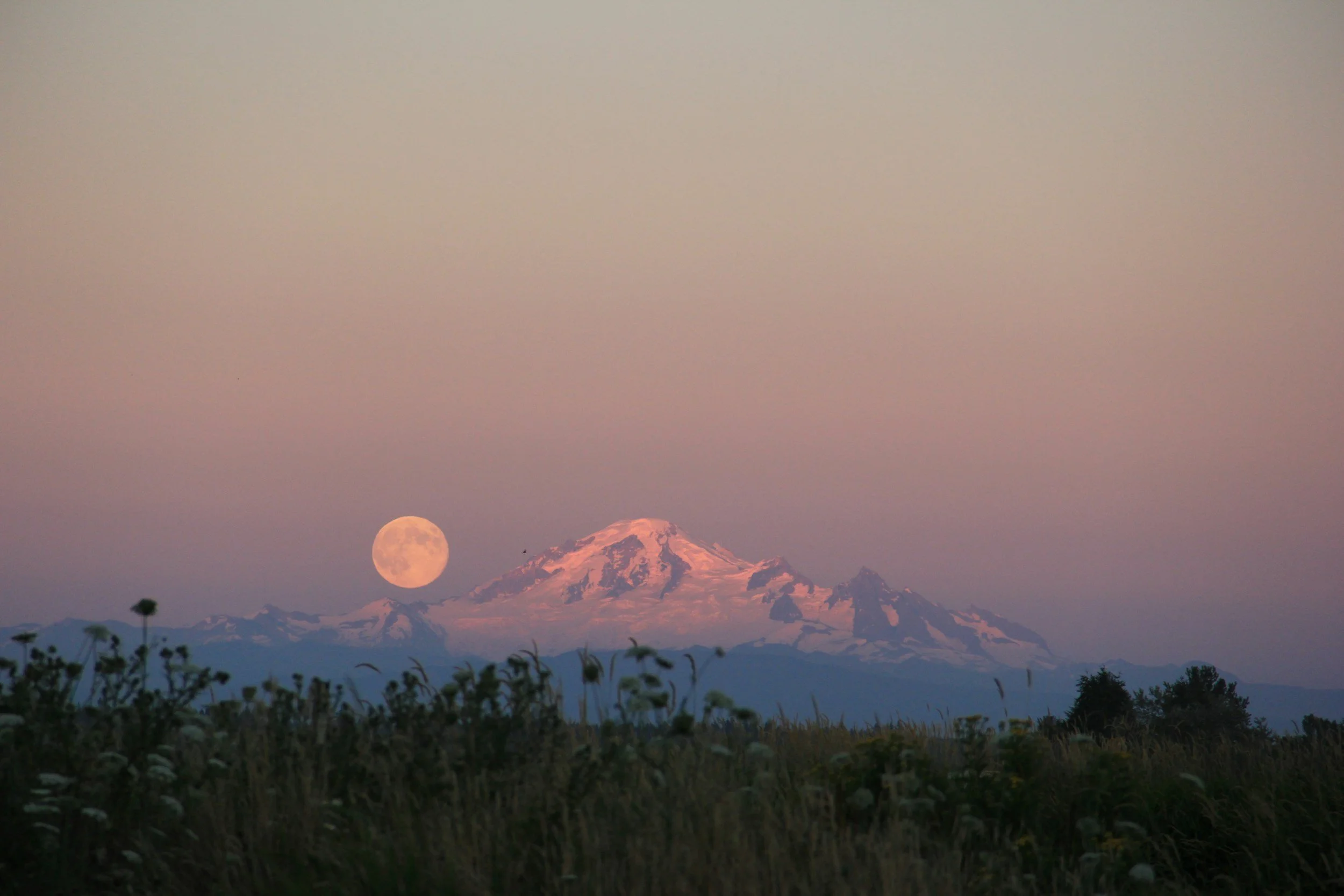
Next we have the lunar calendar. We talked briefly about this also, how the moon cycles around the earth and has four phases within it: New Moon, First Quarter, Full Moon, and Third Quarter. Right now I prioritize my menstrual cycle over the lunar calendar because I’m still cycling but, I think there are opportunities to tap into moon energy in other ways. Using the example of my podcast, I had the idea to release episodes on the full and new moons. I was already planning on a mostly every-other-week cadence, with a few exceptions, of course, so I thought, why not align this offering with the moon?
Other ways to think about it might be if you are planning to submit a batch of work to journals, or publish a newsletter, can you do that on the full moon, or around the full moon, to tap into some of that energy? It doesn’t have to be perfect, but if this is something you’re drawn to, think about some small shifts you might want to try. I think this can bring a lot of sacredness and intention to our creative practice, and even if it’s something no one else knows about, it just provides an anchor for various aspects of the writing life, if we choose to use it.
Cycles of our Bodies
Menstrual Cycle
In the cycles of our bodies category, if you are someone with a menstrual cycle, you experience 4 distinct seasons within each cycle: Follicular, Ovulation, Luteal, and Menstrual/your bleeding days.
Follicular: This is your inner spring, and it’s a season all about emergence. You’re coming out of your bleed, and there’s a sense of initiation and eagerness, like a flower starting to sprout. This moves us into ovulation, our inner summer, aligned with themes like visibility and growth. It’s like a rising tide that started a week or so before and now you’re just riding that wave of energy before moving into the luteal phase. This is like the harvest season of the cycle. It’s about culmination and preparation. You tend to start having a natural decline in energy and a desire to pull inward heading into menstruation, which is the inner winter. It’s about rest and reflection and staying within yourself.
Circadian Rhythm
If you don’t have a menstrual cycle, or in addition to your menstrual cycle, you can also think about it in terms of a 24-hour cycle, which is called your circadian rhythm. This basically governs systems like your sleep-wake cycle, body temperature, hormone release, and digestion, and if you layer it into a seasonal lens, winter would be overnight, spring is the early morning to about noon, midday is summer energy, and the second half of the day is autumn. And you might notice this in the natural ebb and flow of your energy throughout the day.
Subtle But Important Cycles
This is already a lot to work with, but I also want to draw attention to some of the more subtle seasons we might experience throughout the year. In my experience, these can play a big role in how you might orient yourself and think about the best times to focus on writing vs. pulling back.
Academic Calendar Energy
The first one is academic calendar energy. If you have kids in school. If you are a teacher, or a former teacher, or if you just love a new notebook in September, academic calendar energy might impact your creativity. In some ways this is strange because the energy is so vibrant and it almost feels like a spring energy, but it’s arriving in a season when we’re supposed to be winding down a little bit. At the same time, if you’re coming off a summer when your kids were home and then they go back to school, you might finally feel like you can hear yourself think again and it could be a great time to focus. (A sub-category here might be sports seasons if you have kids in a lot of activities, so think about that too.)
Work Rhythms
Another rhythm to think about is a work cycle. The most extreme example that comes to mind right now is an accountant when you know January to April is busy with tax returns. You might have an annual event, you might have conferences, or just a time that for whatever reason is a heavier load than others in your year. Similar to the academic calendar, it can go a long way, if you know about these in advance, to choose activities during this time that are more restorative, like reading or jotting down ideas, as opposed to putting pressure on yourself to finish a draft of something.
Religious Celebrations
You might also want to consider religious celebrations. If that’s an important aspect of your life, you can anchor to holidays and reflective moments throughout the year as something you can count on as a source of meaning and connection.
How to Know Which Cycles to Follow
To wrap up, I don’t want you leaving this space feeling overwhelmed. You do not have to follow any of these suggestions. Or you can follow one. Or you can pick one as your primary and then pull in aspects of others that feel good to you. It’s very flexible.
Again, the whole point of this is to provide feelings of groundedness and to get to know ourselves more deeply, because that will inform all the choices we make when we’re creating things that matter, and we can hopefully show up with more ease when we’ve taken some of these things into account.
You might want to do some journaling around this, or just think through the questions I’m about to share. Again, this is about defining what makes sense for you.
First, a very easy question: Do you have a menstrual cycle? If the answer is yes, I usually recommend that people follow that cycle first. Sometimes it can get complicated if you’re trying to do the menstrual cycle AND the moon together because they don’t always line up perfectly. So always start with your BODY as a first step.
Another prompt is: When throughout my cycle, or throughout the year, do I feel the most expansive, creative, and alive? Essentially, you’re wanting to try and determine where those natural points of energy are. That way, if you’re planning to start drafting a new book, you don’t come up with an unrealistic intention that doesn’t take your life into account. You want it to be fluid and flowing and work both with your natural capacities as well as your external obligations.
To that end, be sure to list when throughout the year you have family commitments, work obligations, sporting events, even upcoming vacations. All of those dates that are locked in—don’t push yourself to try and finish the edits of your manuscript three days before you leave for a big trip. I may or may not be speaking from personal experience.
Finally, think about when you naturally feel more inward or craving rest. This might be a month of the year, this might be certain days in your cycle. It’s just as important to account for fallow time in our writing practice as it is to generate new work or especially completion. In a lot of cases, we can be drafting or in the middle of something, but the special kind of focus we need to bring something towards completion requires real mindfulness in terms of when we can get that time to ourselves.
I’ll leave you with a final example of how I bring cyclical awareness to the creation of this podcast, because that’s been infused in my process since the beginning. There are essentially three phases of any episode: show development, recording, and publishing. For something like show development, I like to tap into my follicular phase when I’m writing the first draft of an episode, and then my luteal phase when I’m doing a round of top edits. That’s one thing I try to do. For recording, I’ve noticed that the first half of my cycle is usually a great time for that. I’m usually feeling the most open and there’s more of a rising energy rather than a desire to start powering down.
You might not have a podcast, but whatever it is you do—writing a newsletter, writing poems, working on a book-length project—I guarantee that there are subtle shifts you can make to bring extra mindfulness around your natural energy levels, the unique circumstances of your year, and how you’re feeling.
If I’ve learned anything from engaging in these practices myself for so many years, it’s that they always meet us where we are. This is not a space that cares about perfection. Sometimes looking up in the night sky can be enough. Walking away from the computer can be enough. Giving yourself permission to not finish something ahead of a work deadline or a family situation is ALWAYS enough.
These are not rigid and immovable tools. They’re support beams for the architecture of our creative practice, and they’ll be here season after season, year after year.